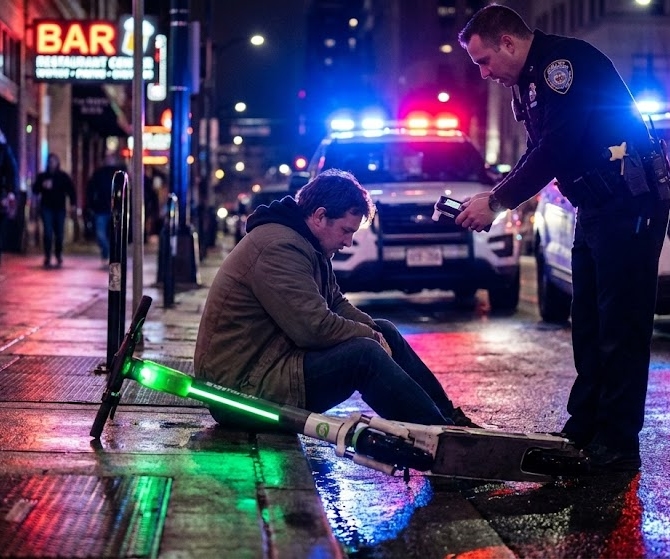
Previously, a DUI defense usually used to be reduced to your word versus the word of the officer. In case a policeman said you swerved or hit a curb, then it was impossible to prove otherwise without a dashcam. However, by the year 2026, the streets we use when commuting to work have already turned into mute spectators. The infrastructure of modern Smart City, which has 5G-connected streets, IoT traffic cameras, and AI-controlled municipal cameras, is changing the litigation of the traffic stops.
We are no longer looking at a police report at the law office of James Yeargan. A subpoena on the intersection itself.
The City as a Digital Witness
A smart intersection back in 2026 does not just change lights. It is continuously recording the flow of all the objects in its vicinity to better the traffic flow and safety. This metadata may be the secret of a strong defense.
Pavement Sensors: Pressure and haptic sensors are fitted in the roads to monitor the precise position of a vehicle in a road. When an officer says you were weaving, he could find out the exact route you took by the lane-tracking records of the city, a record which, on many occasions, has been found to vary with the subjective judgment of the eye of a witness.
Mechanical Necessity: Have you swerved to get out of the way of a drunk driver or was it a pothole? Sensors on smart cities tend to record any road hazard or any debris or even a sudden change in pavement friction (such as an oil slick) on the road in real-time. With this data we could prove that your erratic movement was not some unthoughtful action, but a defensive driving exercise.
Environmental Context: AI-enabled cameras of the municipality do not capture video alone, but they capture environmental conditions. We can draw information about glare rates on the nearby digital billboards, the exact time when some faulty traffic light was on, or local weather conditions which might have changed visibility or grip.
Moving Beyond the Dashcam
Dashcams and bodycams offer a POV view of a specific situation, whereas smart city data offer a god-eye view. This is objective and does not have the bias inbuilt in a law enforcement officer who may be pre-programmed to find reasons to arrest.
James Yeargan observed that with the municipalities spending money on their programs of Vision Zero and other smart-traffic, the amount of available data has been taken through the roof. The difficulty is not that the evidence does not exist, but rather found in most lawyers being unaware of the fact that it actually does exist and that they lack the knowledge on how to get the city to release it under the law.
The Race against the Overwrite.
Time is the most important element in a Smart City defense. In contrast to police data, which are normally stored in a criminal file, municipal sensor data is commonly overwritten within 7 to 14 days as a way of conserving server space.
When you are arrested, you need to act at once. James Yeargan makes use of the letters of “Preservation of Evidence” so that the city does not erase the 5G logs and sensor data of the intersection where you were detained. When such data has been lost, a fragment of your defense is lost along with that data.
Your Right to the Metadata
The Fourth Amendment grants you the right to unreasonable search and seizure but in 2026, we must also consider your right to discovery. In case the city is gathering information on your driving habits to make the city safer, you can use the same information to make sure that you can have a fair trial.
James Yeargan is the first to implement the application of IoT forensics in DUI defense. We feel that that everything is connected in the world and therefore, the truth must be readily available. We will see that the pavement under the tires can vindicate you, in case it can be brought to bear its case in court.